If every time before stepping on stage you feel nervous, ready to call it off, or battling performance anxiety—you’re not alone. I’ve been performing since I was 6, and I still feel it every single time. Here’s how I’ve learned to turn it into energy
The 3 Basics Before You Step on Stage
I have been performing on stage since the age of 6. Many people around me, my students, colleagues and audience think at this point of my life as an experienced dancer I should be calm as a Buddhist entering the performance space. But every time I go to stage I am physically tortured by performance anxiety. It absolutely doesn’t matter if it’s a big one in front of 50 000 people or a little demo in front of 20 people. However with the ideas I share with you in this blog post I’ve learned to control and reprogram my performance anxiety.
Before we get into the deeper, more transformative ideas, here are three essentials that will instantly reduce stress and help you feel more confident when you perform:
1. Be ready
Prepare and practice a lot.
Know your choreography, steps, or lines.
Have your music, shoes, and everything else ready so you can eliminate that huge chunk of last-minute stress.
2. Project a bright process and result
Imagine yourself having the best time on stage.
Play the performance of your dreams on the “imagination screen” in your head.
Feel the joy of it—because this exact moment will never happen again, and that makes it precious.
3. Take care of yourself
Get enough sleep.
Stretch and warm up.
Eat well and just enough for your needs so you feel light, ready, and in good shape to give your best.
Those first three points would make a big difference. However I’d love to share some of the deeper and more fundamental thoughts. To break free from the dark net of performance anxiety, doubts and worries weakening you, blinding your eyes, making your stomach go wild, let’s dive into the question of what is that feeling exactly, why is it there and how to tame and reprogram it.
Surf the excitement
My first dance teacher always told me: “Feeling butterflies before a performance is good—it means you care.”
I was confused because excitement is supposed to be wonderful feeling, but I felt bad, small, my whole being shrank and my thoughts were sporadic. The feeling of excitement in fact is balancing on the thin line between two oppositely charged states and actions:
- Bright side – Adrenaline saying: “Yay! Let’s do this!”
- Dark side – Fear and anxiety whispering: “I wish it was over already…”
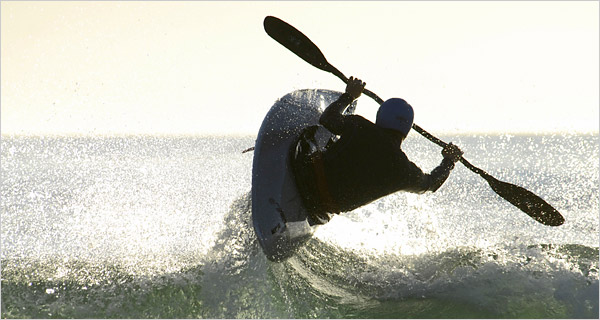
Recognise both sides.
Remember, fear and anxiety are created by you, inside you. Once you see that, you can “surf” the feeling and take back control.
What Is Your Message? Or… Deal With Your Ego
Why are you so afraid and nervous? Maybe the reason is Ego.
Why are you so nervous? Often, it’s ego talking:
“Will I be better than the others?”
“Will I look good?”
“Will they like me?”
Me, me, me, me, me.
The truth: dance is a language—like English or Spanish.
With it, you can say something beautiful and inspiring… or something meaningless.
Ask yourself:
Is my goal to impress or to give?
What am I dancing for?
What am I transmitting to the audience?
This was one of the most powerful thoughts that really shifted the whole story of performance anxiety for me.
What am I dancing for, what am I transmitting?
I come out on stage in front of people who are right at this moment spending their time to listen to me, to hear, see, feel what I am about to deliver. Are they interested in looking at me worrying about me, seeing me trying to show them how cool I am? Is that really worth the time of both parties?
Or maybe we can have a more nurturing for each ones story.
When you focus on delivering a message, whether it’s joy, music, story, or mood—you take the spotlight off yourself and remove the pressure to be perfect. Giving is beyond ego.
 What can be the message of let’s say a jazz/ swing dance?
- the emotion you want to deliver
- the music you want to open up for people
- the fresh idea of moving to this or that music
- the story of one’s relationship if that’s a dance in a couple
- or maybe you actually have a drama story, character in a dance, deliver that story
Sometimes I cannot verbalise what is my message in fact, it’s more of an intuition of what I am about to share.
But What If I’m “Just Dancing”?
In the beginning of my jazz dance journey, I performed a lot of character-based shows — chicken, cowboy, archetype of a woman, puppet, doll, gangster, orphan… Each time before going on stage, I was on fire, slipping into my character. My only worry was to deliver the story.
Later, I started doing many performances and demos based on pure improvisation — just me as myself. No costume. No character. Just my clothes, my body, and the music. And it felt completely different.
Suddenly, my thoughts were:
- “I have to be good.”
- “I need to wow people.”
- “I want to be better than others.”
- “I hope they love me.”
That pressure to succeed — to satisfy these ego-driven fears — threw me off my axis.
I had to reset my relationship with myself and my dancing. I reminded myself: Why am I dancing? What am I saying with my dance language? Asking this before every demo gives me courage. It moves me beyond the need to be perfect or “the best,” because giving is beyond ego.
Giving is beyond Ego.
Fancy Steps vs. Purpose
Is a performance or competition really about “fancy moves” or feeding the ego?
Does anyone truly care about your most difficult step for its own sake?
Only if it serves the message.
Performing purely for ego or tricks is demanding love from the audience, instead of giving them something. Movement for the sake of movement leans toward sport. But in art — especially in jazz and swing — there’s more to offer.
I think it is especially relevant for the popular culture of swing and jazz, the form of arts and entertainment formed and developed by people for people and not by elite art group for itself. Think about it, it’s the mean of communication, it’s the magma connecting the people, who find this communication valuable and important.
Get in the “zone”
To deal with the performance anxiety, which is as we discussed above the thought of “me” and “how am I looking” I as well turn to acting technique.
Russian theatre master Konstantin Stanislavski called it “being in the zone.”
That’s the state when you’re:
- Fully connected to your music and space
- In the moment
- Tuned into your character (if you have one)
By being in the zone we understand being in the moment, character, space and circumstance of what you are doing.
When you’re not in the zone, you start thinking: “Do they like me?”, “Am I doing this right?”—and your body physically locks up.
Before you perform:
- Get into the vibe of your show—lyrical, playful, dramatic…
- Tune into your music.
- “Arrive” emotionally in the space.
- Think about your perspective—what you’re about to say with your dance.
• this is just an example and not a medically specific data.
Connect with Your Inner Animal
Anxiety and fear is something that brings all our being in the head and locks us in the mind castle. We loose the connection to the floor, our body, breath, surroundings. Fear disconnects us a little from reality and traps in the mind that worries and projects failure.
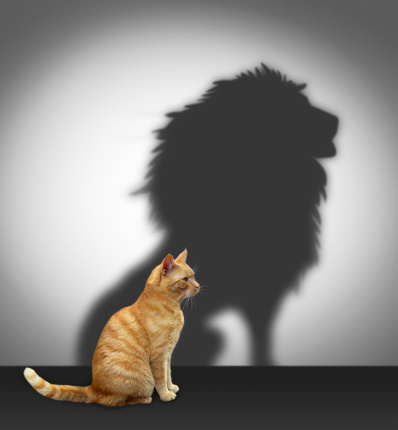
Reconnect with your body:
- shake and stretch
- feel your toes “grabbing “ the floor and feet standing firm on the ground
- feel the weigh of your whole body, especially in your belly
- connect to the gravity
- feel big, expanded, ready and brave to embrace the stage space and further
Deep breathing helps get into the body. Connect to your inner animal and wait to feel the sparkle in the eyes!
Grow Beyond the Stage
Some of my most powerful performances happened in front of thousands—Cork Opera House, “Violon Sur Le Sable” festival, “I Love This Dance” in Paris.
In those moments, I felt bigger than my body—my energy expanded to fill the whole space, reaching every person in the audience. That’s the power of being grounded, connected, and giving through your performance.
Final Thought
Whenever I am about to perform, standing on the side of the stage, these are the thoughts and sensations that are running through me. I breath deeply, connect to my body and shake it a bit. Always remind myself why and am I here and what am I about to say or deliver with my show, dance. I feel my weight on the ground and the readiness, that thirsty “animalistic” sparkle. I do it every single time before performing to settle my energy in the right way almost automatically.
If you get nervous before every performance, you’re not alone.
It’s natural to feel vulnerable when you put yourself out there.
The goal isn’t to erase the butterflies—it’s to turn them into bright excitement.
Feel them, own them, and let them fuel your art.